
Last updated October 16, 2026
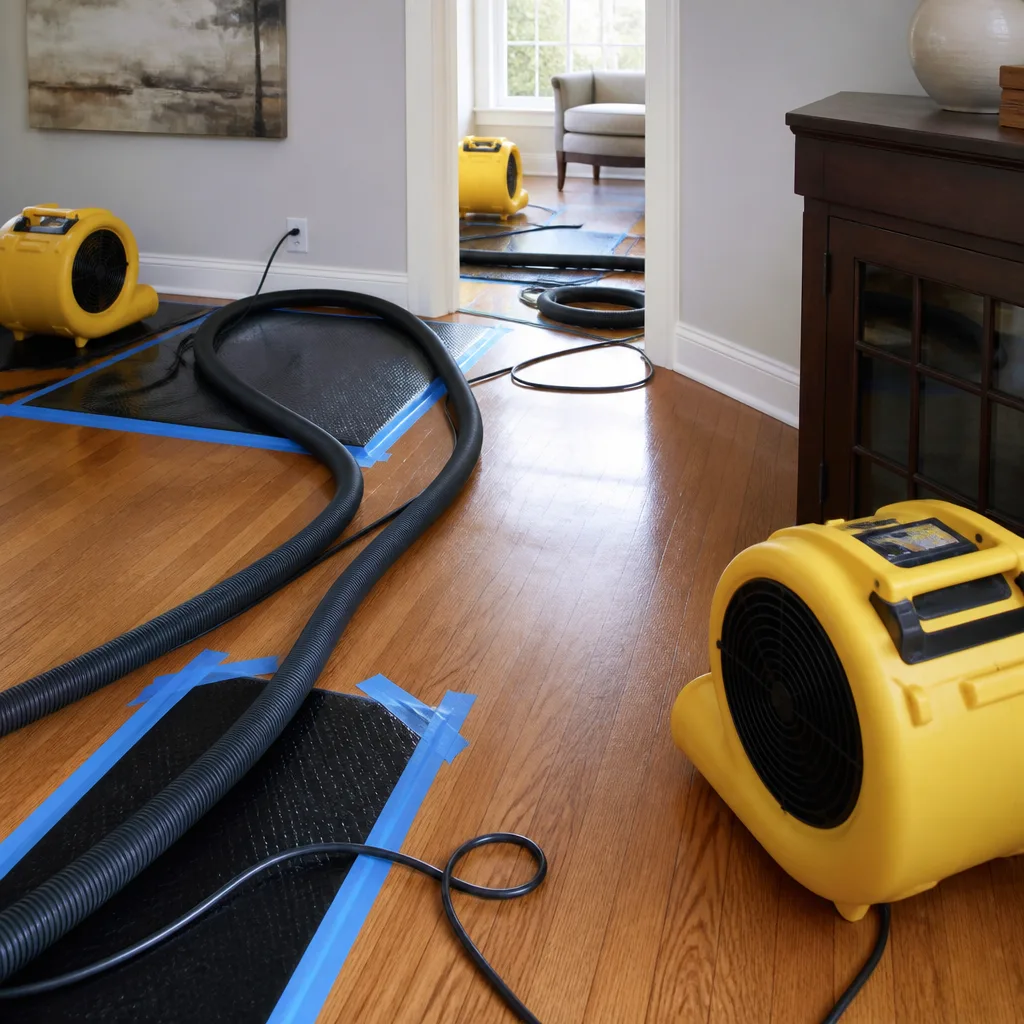 Water damage drying
 Fire & smoke cleanup
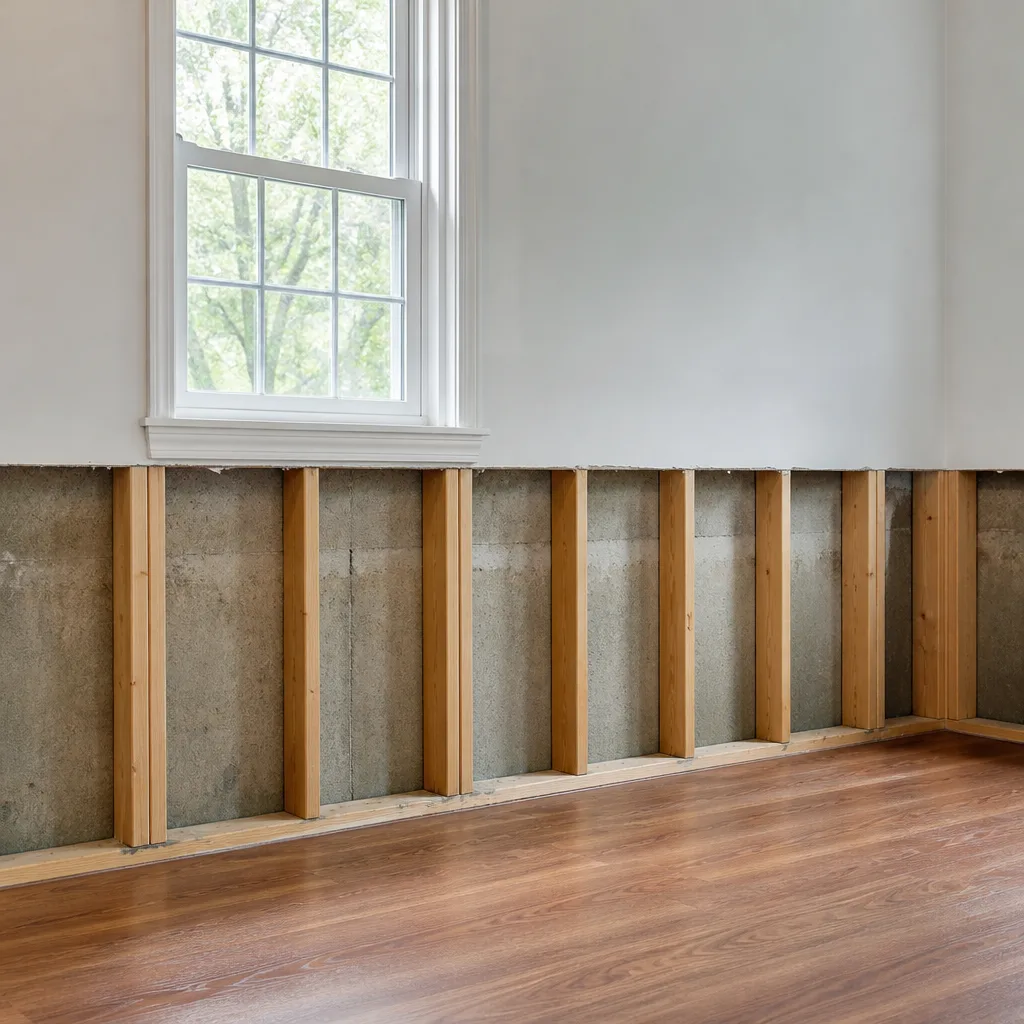 Mold remediation
 Storm response
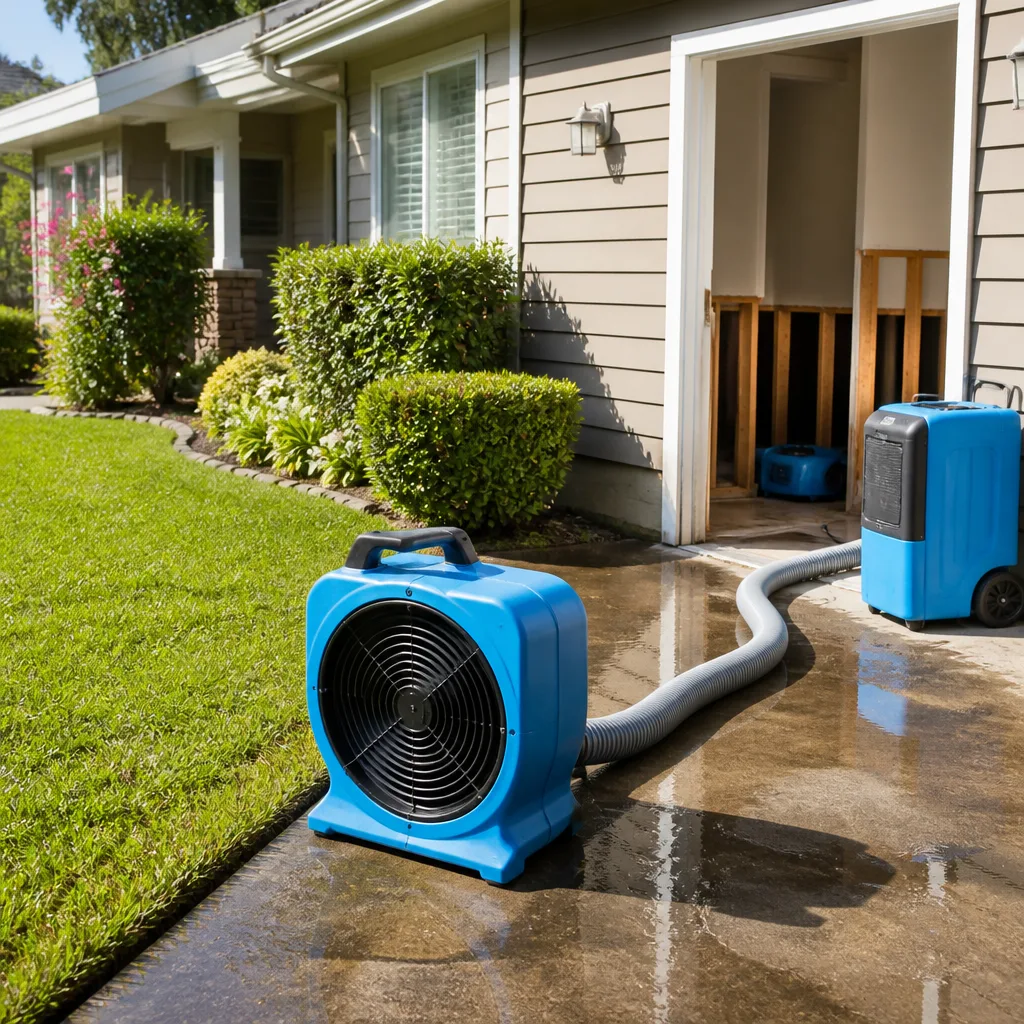 Sewage cleanup
 Reconstruction
Free visual inspection and a written scope of work before any mitigation begins - photos, moisture readings, and drying logs go in your claim file
The scope we write is the scope we bill. Anything new gets shown to you, in writing, before we touch it.
Get your free estimateThe Complete Guide to Damage Restoration in Ventura
Here’s a statistic we wish more Ventura homeowners knew before they needed it: calling a restoration company within the first hour of a water event saves roughly 40% on total repair costs compared to waiting 24 hours. That’s not marketing math, it’s the compounding math of water moving through drywall, wicking up baseboards, and reaching structural lumber. But fewer than 1 in 5 people know what to actually say when someone picks up the phone, and that hesitation costs them money. This guide exists to solve that. You’ll learn the four phases of a real restoration job, how Ventura’s coastal air changes drying timelines, what a legitimate scope of work looks like line by line, and how to know exactly who is walking through your door before they knock.
Quick Answer
Damage restoration in Ventura, CA is the process of stopping active damage, drying the structure, repairing what was destroyed, and proving the space is safe to live in again. It happens in four sequential phases: mitigation (stop the water), drying (remove hidden moisture), repair (rebuild), and clearance (verify). A legitimate Ventura restoration company will give you a written price before work starts, document everything for your insurance claim, and tell you the name of the technician coming to your home before they arrive. You’ll also want to understand Damage Restoration Permits, Codes & Inspections in CA: What You Need to Know before work begins.
Restoration work we handle
Table of Contents
- The Four Phases of a Real Restoration Job
- Why Ventura’s Coastal Humidity Changes Drying Timelines
- What a Legitimate Scope of Work Looks Like
- Insurance Documentation: The First 24 Hours
- Why Technician Credentials Matter More Than Brand Names
- What Damage Restoration Costs in Ventura
- How to Choose a Restoration Company Without Getting Burned
- Common Mistakes to Avoid
The Four Phases of a Real Restoration Job
Restoration is not a vague process where a crew shows up and “fixes things.” It’s a sequence of four distinct phases, each with its own goal, its own tools, and its own definition of done. When you know these phases, you can tell immediately whether a contractor is doing the job correctly or cutting corners.
Phase 1: Mitigation (stop the active damage)
Mitigation means stopping water from continuing to cause harm. This is the emergency phase, and it begins the moment someone arrives on site. The crew locates the source (a failed supply line, a roof leak, a slab crack, a sewer backup) and stops it. Then they extract standing water using truck-mounted or portable extraction units. In our experience, most residential water extractions in Ventura run between $1,200 and $3,800 before drying equipment is even set, depending on the affected square footage and the category of water involved. Mitigation also includes removing unsalvageable materials: soaked carpet pad, wet drywall below the water line, any insulation that’s saturated. The goal is a stable environment where drying can actually work.
Phase 2: Drying (remove hidden moisture)
This is where most homeowners get fooled. The floor feels dry, so they assume the problem is solved. But water travels. It moves through drywall, under baseboards, behind cabinets, into wall cavities. Drying means placing professional air movers and dehumidifiers strategically to create airflow across every wet surface and pull moisture from the air so the structure can release what it’s holding. Technicians take psychrometric readings (measuring the moisture in the air) daily to track progress. These readings tell us when the structure is genuinely dry, not just dry on the surface. A Ventura drying job typically runs 3 to 5 days, which brings us to the next section.
Phase 3: Repair (rebuild what was destroyed)
Once the structure is dry, reconstruction begins. Drywall goes back up, prime and paint, flooring, trim, cabinets. This phase is scoped, scheduled, and priced like a remodel. Unlike mitigation, repair work should never be rushed. A good restoration company will give you a written repair scope before swinging a hammer, and it should read like a construction contract, not a vague promise.
Phase 4: Clearance (prove it’s safe)
Clearance is the verification step. For water damage, it means final moisture readings confirm the structure is dry. For mold remediation, it means post-remediation air sampling shows spore counts have returned to normal background levels. A legitimate company provides documentation of this: photos, readings, lab results. If a contractor can’t or won’t show you clearance documentation, the job isn’t done.
Why Ventura’s Coastal Humidity Changes Drying Timelines
Ventura sits on the Pacific coast, and that changes everything about how water behaves inside a house. Relative humidity in Ventura routinely runs 65 to 75 percent, especially from May through October when the marine layer sits over the city. In a dry inland climate, a saturated wall cavity might release its moisture in 2 or 3 days. In Ventura, that same wall cavity often takes 5 full days.
Here’s why: drying works by creating a vapor pressure differential. Wet materials release moisture into the surrounding air. Dehumidifiers remove that moisture from the air, which allows the materials to release more. But when the outside air is already humid, and the building envelope is leaky, the equipment has to work harder. The dehumidifier isn’t just removing the moisture from the water event, it’s also removing ambient moisture from the coastal air seeping in. That’s why a crew that rushes a Ventura drying job, or skips the dehumidifier because “the air movers will do it,” is setting you up for a mold problem six months down the road.
We’ve seen this in neighborhoods across the city. A home in Midtown Ventura with older single-pane windows will dry measurably slower than a newer home in the hills above Foothill with tight construction. A ground-floor condo near Ventura Harbor deals with both the water event and the ambient moisture from the marina environment. None of this is mysterious. It’s just physics, and it’s why drying timelines in Ventura are set by moisture readings, not by calendar dates.
What a Legitimate Scope of Work Looks Like
This section will save you more money than any other part of this guide. The difference between a legitimate scope of work and a vague quote is the single biggest tell of how the whole job will go. A vague quote says things like “dry affected areas” or “repair drywall as needed.” A legitimate scope of work says exactly what will happen, where, and for how much.
Here’s a line-by-line example of a real scope of work for a typical Ventura water loss in a bathroom that flooded into an adjacent hallway:
- Emergency water extraction: Remove standing water from bathroom and hallway using truck-mounted extraction unit. Square footage: 180 sq ft. $450
- Contents manipulation: Move and block furniture in affected rooms. Protect contents not removed. $150
- Demolition: Remove and dispose of saturated carpet pad in hallway (46 linear ft). Remove damaged drywall to 2 ft above water line in bathroom and hallway (22 linear ft). $680
- Drying equipment: Set 4 air movers and 2 LGR dehumidifiers (Dri-Eaz brand). Monitor daily with psychrometric readings. $95 per day, estimated 4 days. $1,520
- Drywall repair: Re-hang drywall to match existing. Tape, texture, and prime. $920
- Paint: Paint repaired areas, two coats, customer-selected color. $380
- Flooring replacement: Install new carpet pad and re-stretch existing carpet in hallway. $440
- Clearance: Final moisture readings, photo documentation, written report. $0 (included)
That’s a scope. It has quantities, materials, specific tasks, and dollar amounts. A vague quote says “water cleanup and repair, $4,500.” If a contractor hands you the second one, you’re about to be surprised mid-job or at the end. At Marsh Water Damage Ventura home, every job gets a written scope before any work begins. It’s printed on the work order, and it doesn’t change unless you approve a change order in writing. That’s not a policy we advertise, it’s just how restoration is supposed to work.
Insurance Documentation: The First 24 Hours
The first 24 hours after a water event determine how smoothly your insurance claim goes. Most homeowners assume the insurance company will gather what they need. They won’t. You, or your restoration company, need to produce it. Here’s the specific documentation a Ventura homeowner needs in place within the first day:
- Photos before anything is moved. Not after the crew has pulled up carpet. Before. Standing water, visible damage, the source of the leak. Take 50 photos, not 5. Your phone camera is fine.
- Photos of the source. If a pipe burst, photograph the pipe. If a water heater failed, photograph the water heater. Insurers want to see the mechanism of loss.
- A written log of events. When you noticed the water, when you called, what you did. Time-stamp everything. Insurers look for reasonable action, not perfection.
- The restoration company’s moisture map. A professional crew should document initial moisture readings room by room. This map becomes the evidence of how far the water traveled.
- The scope of work, in writing, with prices. When your claim adjuster reviews the file, a line-item scope with quantities is dramatically easier to approve than a lump-sum number.
- Any receipts for emergency mitigation you paid out of pocket. Keep them. Every one.
Direct insurance billing is the one workflow that changes everything after a water event. The homeowner doesn’t have to front thousands of dollars and hope for reimbursement. The restoration company documents the work, bills the insurer directly, and communicates with the adjuster throughout the process. If you’re in the middle of a claim right now, the best thing you can do is call a restoration company that handles Water Damage Restoration in Ventura with direct insurer billing experience, and get a documented scope started today.
Why Technician Credentials Matter More Than Brand Names
Here’s something nobody tells you about restoration companies: the brand on the truck matters far less than the person who walks through your door. A nationally recognized franchise name means nothing if the technician they sent hasn’t been vetted. And in restoration, you’re not just hiring a contractor, you’re letting a stranger into your home, often during one of the worst weeks of your life, sometimes while you’re home alone or while your kids are there. That’s not a small thing.
The Threshold Verified standard exists for exactly this reason. It’s a five-step protocol applied to every technician before they ever knock on a door:
- Background check: Every technician passes a criminal background check before ever being dispatched to a home.
- Identity verification: The person who arrives is the person who was vetted. Not a subcontractor swap at the last minute.
- Photo and name sent before the visit: You know who is coming. You see their face and name on your phone before they arrive.
- Photo ID badge shown at the door: Every single visit. No exceptions. If they can’t show the badge, they don’t come in.
- Uniformed and identifiable: Marsh technicians wear branded uniforms that match the badge and the photo you received.
This matters because restoration is an industry with a trust problem. Not every company is bad, but enough homeowners have had a bad experience with an anonymous crew that the anxiety is real. The Threshold Verified standard is the answer to that anxiety: proof at the door, not a promise on a website.
Credentials matter too. IICRC is the Institute of Inspection, Cleaning and Restoration Certification, the industry’s primary training and certification body. RIA is the Restoration Industry Association. IFA is the International Facility Management Association’s credential for facility-related professionals. When a technician holds these credentials, it means they’ve been trained on the actual science of drying, not just handed a fan and told to point it at the floor. Our technicians hold certifications through all three organizations, and our drying equipment comes from Dri-Eaz, Phoenix, and XPOWER, the same tools you’d see on a large commercial loss.
What Damage Restoration Costs in Ventura
Let’s talk numbers, because the only thing worse than water damage is a surprise bill at the end of it. Here’s what restoration work actually costs in Ventura, based on our Damage Restoration Cost Breakdown: The Ventura Homeowner’s Reference for 2026 and what we see across the city’s housing stock, from older beach cottages near the Ventura Pier to newer construction in the East End.
- Water extraction only (no drying): $450 to $1,200 depending on the size of the affected area.
- Extraction plus drying equipment (3-5 days): $1,800 to $3,500 for a typical single-room loss. Larger losses affecting multiple rooms, $4,000 to $8,000.
- Full water damage restoration including drywall repair, paint, and flooring: $3,500 to $12,000 for a typical bathroom or kitchen loss. Whole-floor losses can exceed $25,000.
- Mold remediation: $1,500 to $6,000 for contained areas (under 100 sq ft of visible growth). Whole-room remediation or crawlspace work runs higher, and post-remediation air sampling adds $300 to $600 per sample set.
- Storm damage (roof leak, window intrusion): Wide range depending on structural involvement. A minor roof leak with drywall repair runs $1,200 to $3,000. Structural drying after major roof failure can exceed $15,000.
These are Ventura market numbers. Not national averages. Not Los Angeles prices. The biggest variable is always how quickly the water was stopped and how far it traveled before anyone noticed. That’s why the 40 percent savings figure from the top of this guide holds up. Water that sits for a day moves from a $2,000 extraction into a $12,000 rebuild.
One more thing on cost: a written price before work starts is non-negotiable. If a contractor won’t put the scope of work on paper with a dollar figure attached, walk away. You’re not being difficult. You’re being smart. Every job we do in Ventura includes a written scope, a written guarantee, and a 365-Day Done Right Promise. If the repair is not right within a full year, we make it right. That’s printed on every work order, not something you have to negotiate.
How to Choose a Restoration Company Without Getting Burned
The restoration industry has a reputation problem, and some of it is earned. When a homeowner is in crisis, they tend to call the first number that comes up, often before they’ve had a chance to think about who they’re actually inviting into their home. That’s how people get burned. Here’s a practical checklist, in the order you should actually use it, not the order companies hope you’ll use it.
- Who answers the phone? Call at 2 a.m. if you’re in an actual emergency. If you get a voicemail, keep looking. A live person should answer 24/7, including holidays. Water doesn’t wait for business hours, and neither should the company you’re calling. Marsh Water Damage Ventura has a live person answering every call, 24 hours a day, 7 days a week.
- Who is coming to my house? Ask for the technician’s name. Ask if they’re background-checked. Ask if you’ll receive their photo before they arrive. The answer tells you everything about how the company thinks about your home and your family.
- Will you give me a written scope of work before you start? If the answer is anything other than “yes,” hang up. A legitimate restoration company puts the scope, the price, and the guarantee in writing before any work begins.
- Will you document everything for insurance? Photo documentation, moisture maps, line-item scopes. If the company is shy about documentation, they’re either disorganized or hiding something. Neither is good.
- What credentials do your technicians hold? Look for IICRC, RIA, or IFA. These are the recognized training bodies in the restoration industry. If the person on the phone can’t answer this question, the person doing the work probably can’t either.
- What equipment will you use? You don’t need to be an expert, but you want to hear brand names like Dri-Eaz, Phoenix, or XPOWER. These are commercial-grade drying tools. If the plan is “we’ll put some fans in there,” that’s not drying, that’s circulating wet air.
We’ve been doing this in Ventura since 2005 as part of the Threshold Group family of restoration companies, and we’ve seen every variation of the bad contractor story. The most common thread is always the same: the homeowner didn’t know what to ask, so they didn’t ask anything. Now you know what to ask.
Common Mistakes to Avoid
- Waiting to make the call. The single most expensive mistake in restoration. Every hour of delay in Ventura’s humid coastal air allows water to spread further, saturate more materials, and increase the chance of mold by the day. We are not being dramatic. We are being honest.
- Trusting a vague quote. A quote that says “dry affected areas” without quantities, square footage, or a dollar figure per line item is a blank check. In Ventura, where many homes are older and have plaster walls instead of drywall, the cost difference between a legitimate scope and a vague estimate can be thousands of dollars.
- Hiring the first company that answers without vetting the technician. The brand on the truck doesn’t enter your home. The person does. Ask who is coming. Ask for proof.
- Skipping professional drying because the floor “feels dry.” In Ventura’s coastal climate, surface dryness is meaningless. The moisture inside the wall cavity is what causes mold and structural rot, and the wall cavity is exactly where the moisture is hiding.
- Attempting to handle a sewage backup yourself. Category 3 water, which includes sewage and flood water, carries bacteria and pathogens. This is not a DIY situation. Call a professional restoration company and let them handle the containment, extraction, sanitizing, and disposal.
- Not documenting before cleanup begins. Your insurance claim depends on evidence. Take photos before anything is moved. If the restoration crew arrives before you’ve documented the damage, ask them to pause while you photograph everything.
- Assuming your insurance will cover everything without documentation. Insurers approve claims based on evidence, not goodwill. The documentation you produce in the first 24 hours determines whether your claim is paid in full, partially, or denied.
If you’re currently dealing with a mold issue in Ventura, our guide on Mold Remediation in Ventura covers the containment, removal, and clearance process in detail, including what post-remediation air sampling should show.
See the difference
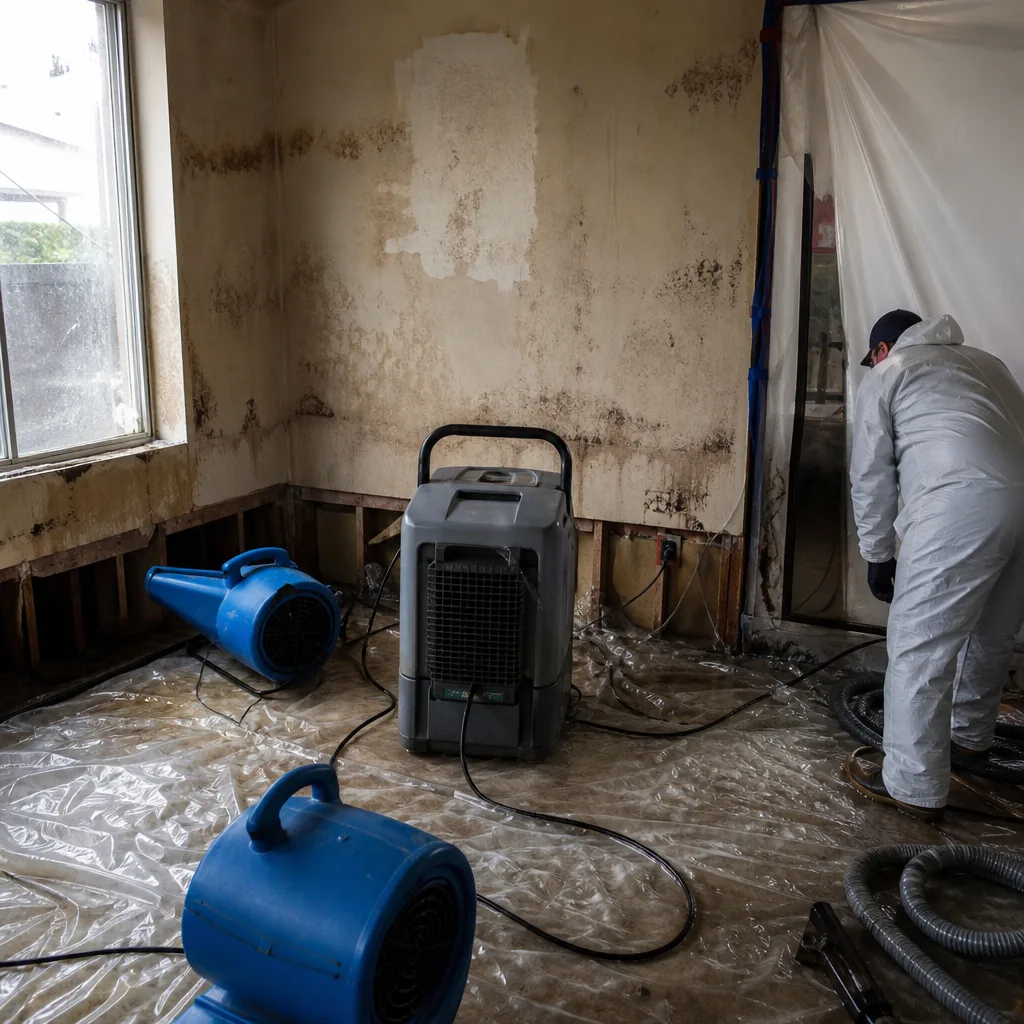 Before
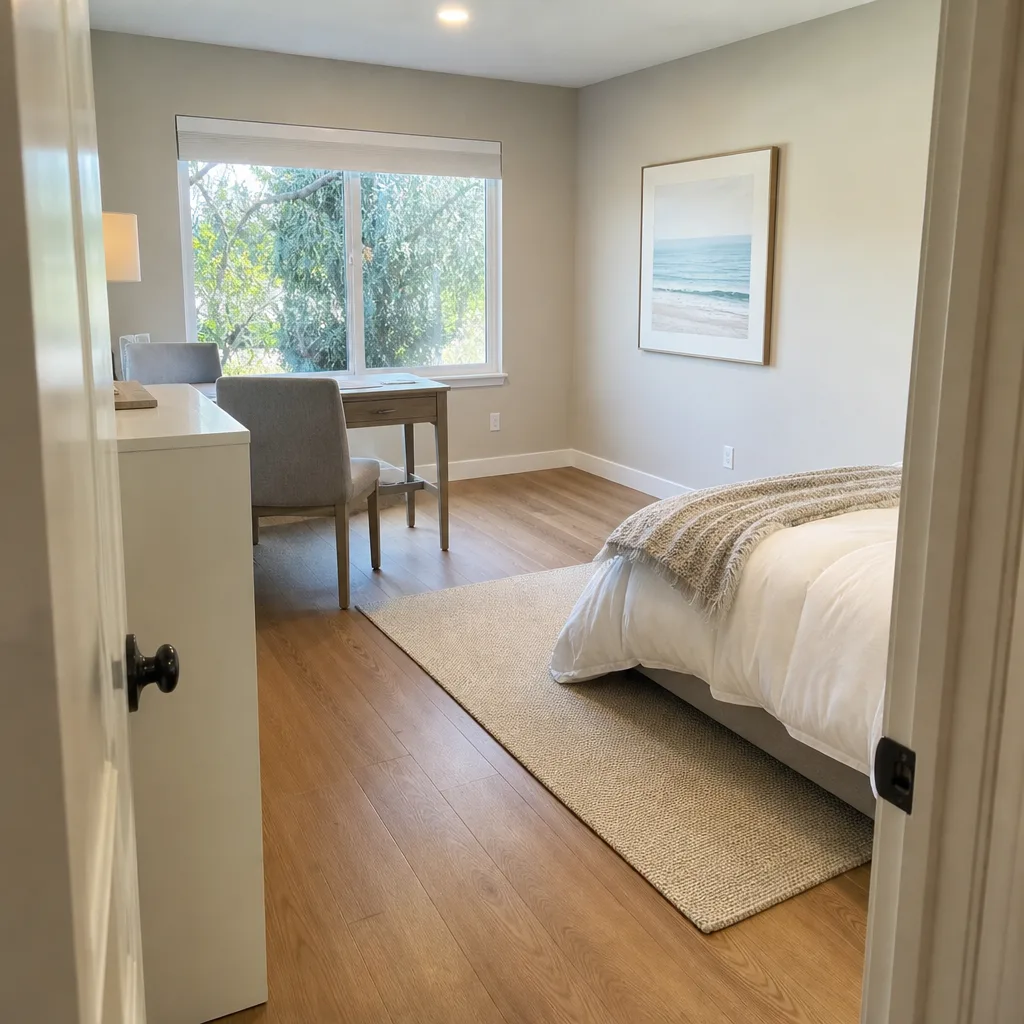 After
After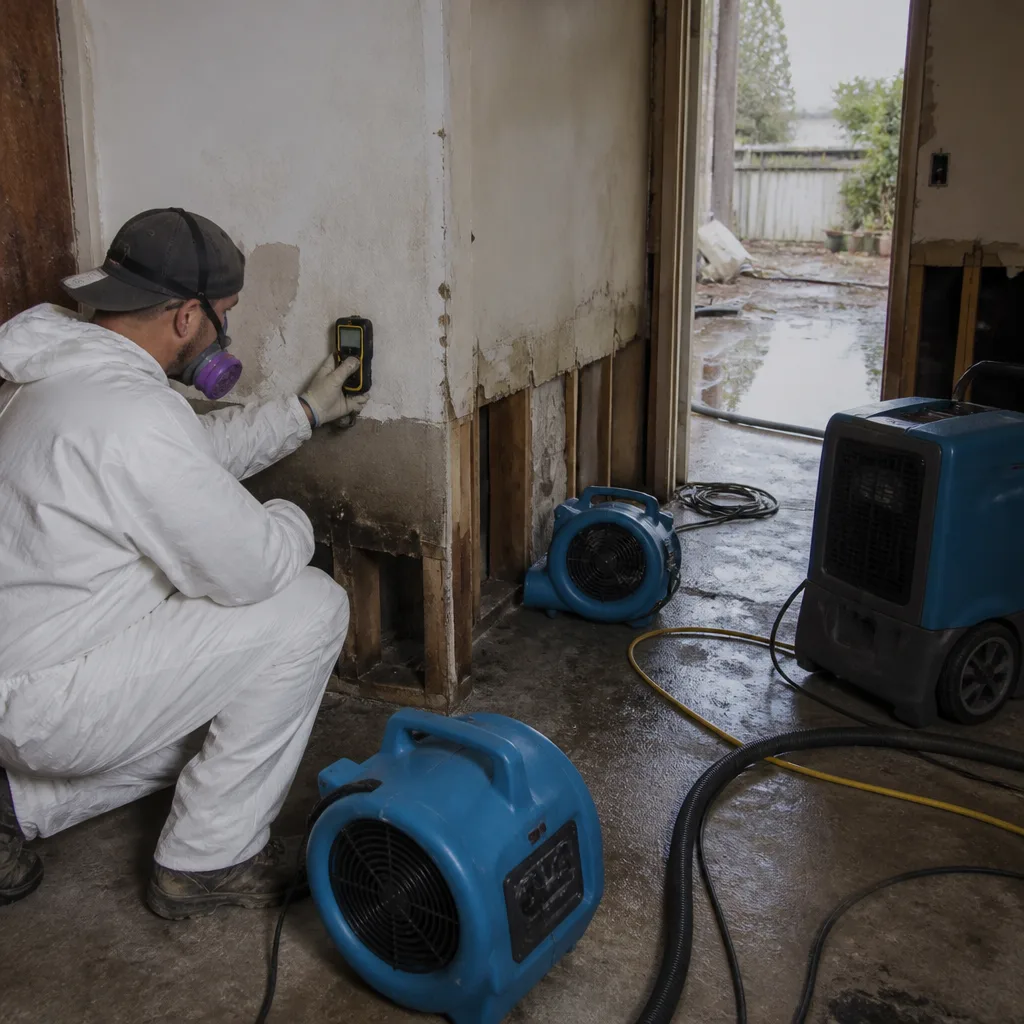 Before
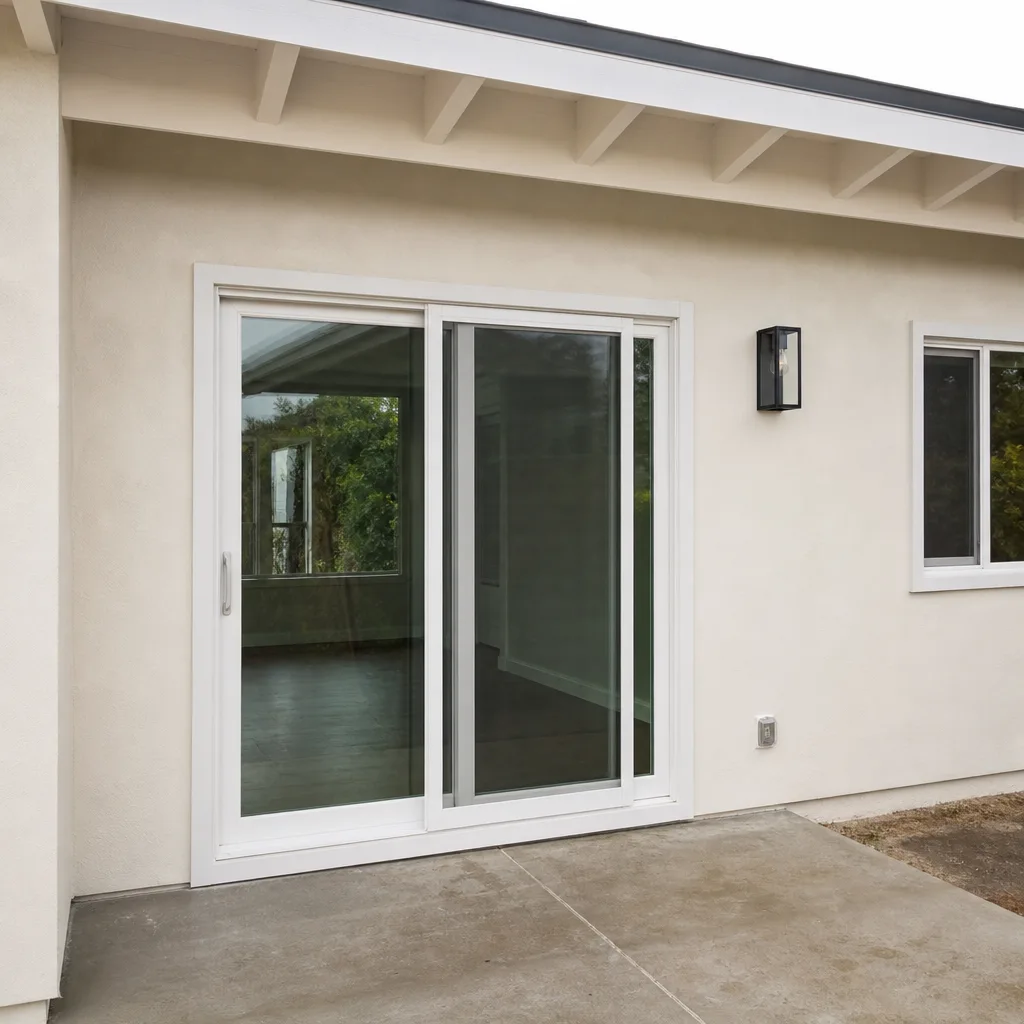 After
After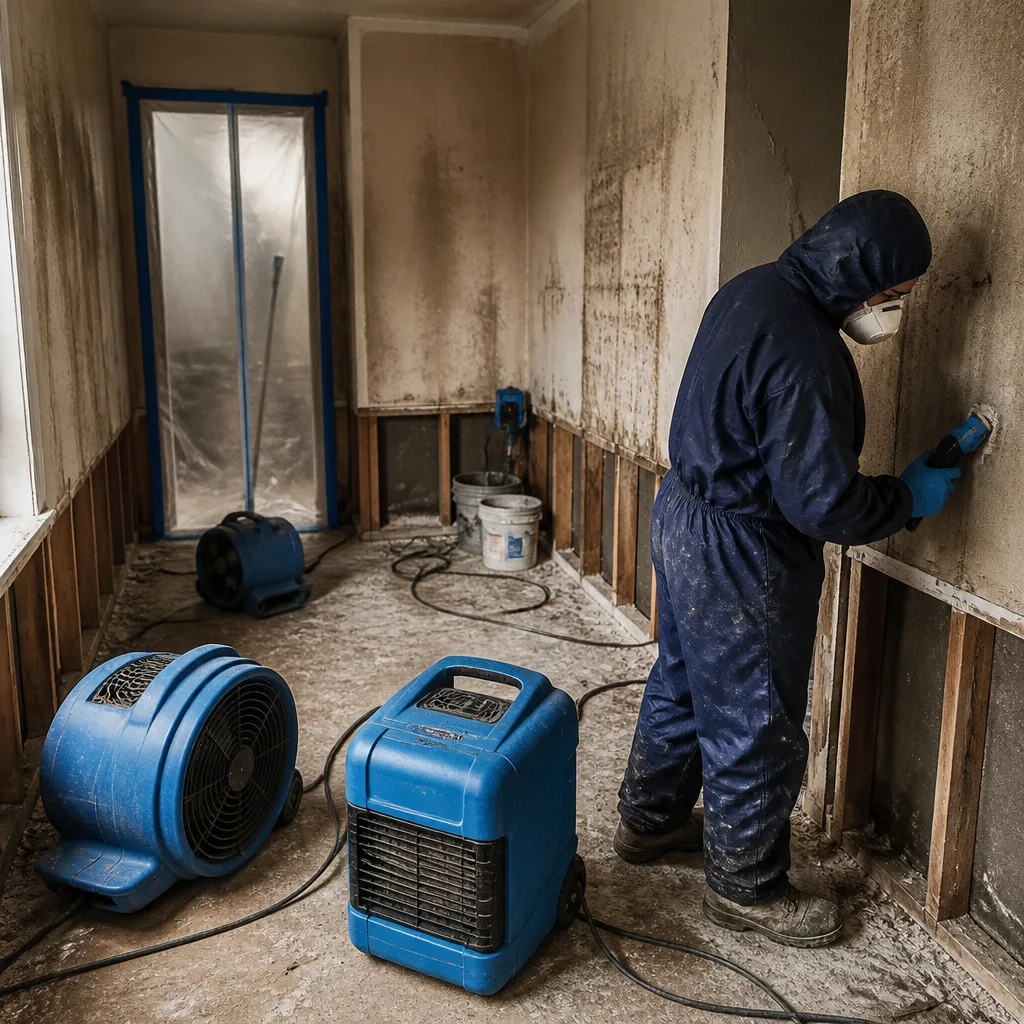 Before
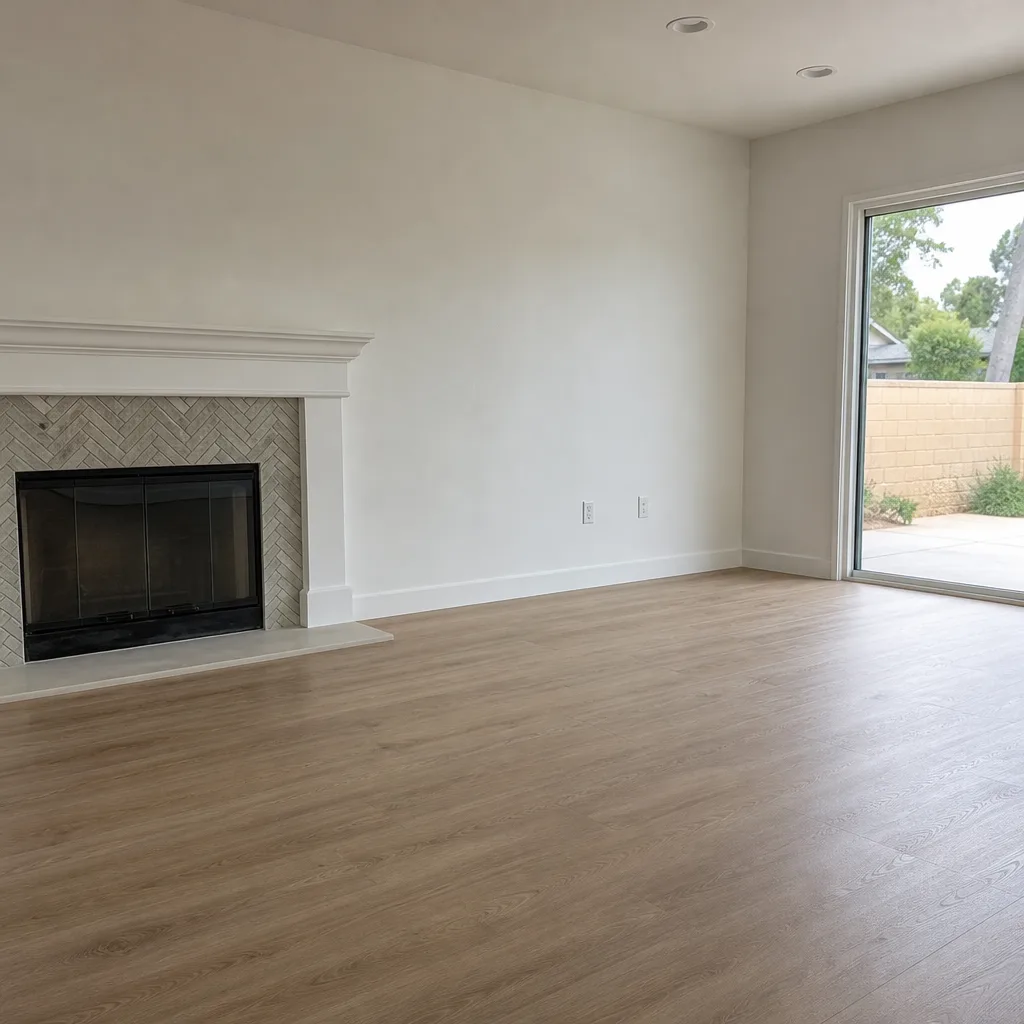 After
AfterWhen to Call a Professional
You should call a professional restoration company immediately if you have standing water that covers more than a few square feet, if water has been sitting for more than an hour, if you smell a musty odor that suggests hidden moisture, if you see visible mold growth larger than a dinner plate, if the water source is a sewer backup, or if water has reached electrical outlets, the breaker panel, or any wiring. For a full checklist of what to watch for, see our Damage Restoration Warning Signs: A Ventura Homeowner’s Reference Guide. Those last scenarios are genuinely dangerous, and you should cut power at the breaker if you can do so safely and then call a professional. Storm damage presents its own urgent triggers: roof leaks that have saturated ceiling drywall, window intrusions that let water into wall cavities, and any situation where structural materials are visibly sagging or bowing.
If you’re not sure whether your situation qualifies, call anyway. A quick conversation costs nothing, and a professional can tell you over the phone whether you’re looking at an emergency or a manageable cleanup. Storm Damage Restoration in Ventura covers wind, rain, and coastal weather events specific to this area, including how to handle saturated attics and crawlspaces. Marsh Water Damage Ventura offers free estimates in Ventura, call (559) 242-4307 and a live person will answer, day or night.
Frequently Asked Questions
Same day in nearly every case, and for true emergencies, within hours. Our phones are answered by a live person 24/7, so dispatch begins the moment you call. Ventura’s geographic footprint, from the Ventura River to the east end, means travel time is rarely the delay. The goal is always to have extraction equipment running within a few hours of that first call. Call (559) 242-4307 for immediate dispatch.
Most standard homeowners policies cover sudden and accidental water damage, like a burst pipe or an appliance failure, but not gradual damage that happened over time. Sewer backups typically require a specific endorsement. Flood damage from rising water is excluded from standard policies and requires separate flood insurance through the NFIP. The documentation you produce in the first 24 hours, including photos and a written scope of work from your restoration company, is what makes the claim go smoothly. We provide direct insurance billing and coordinate with your adjuster throughout the process.
Most contained mold remediation jobs in Ventura take 2 to 4 days, including containment setup, removal of affected materials, HEPA vacuuming, antimicrobial treatment, and post-remediation verification. The timeline extends if the moisture source isn’t fully resolved, which is why the drying phase and remediation phase should be handled by the same company with the same documentation standards. Ventura’s coastal humidity means containment and drying protocols have to be handled carefully to prevent spore spread during the work.
Threshold Verified means every technician who enters your home has passed a background check, had their identity verified, and been sent to you by name and photo before the visit. When they arrive, they show a photo ID badge at the door, every time. It’s a five-step protocol applied to every visit, not just the first one, and it was built for homeowners who want to know exactly who is walking into their home before the knock happens.
Fans alone will not dry a structure in Ventura. Fans move air, but they don’t remove moisture. In Ventura’s 65 to 75 percent ambient humidity, fans often make things worse by circulating humid air across wet surfaces. Professional drying requires both air movers and dehumidifiers, specifically LGR (low grain refrigerant) dehumidifiers that can pull moisture from the air even when the outside air is already damp. The brands we run, including Dri-Eaz and Phoenix, are the same units used on commercial losses.
You call us, and we send someone back. Our 365-Day Done Right Promise is printed on every work order: if the repair is not right within a full year, we make it right, and the second visit is free. It’s not something you have to negotiate or argue for. It’s included automatically on every job we do in Ventura, and it’s time-stamped on the work order you receive before we start. Call (559) 242-4307 if you have a repair that isn’t holding up.
The Bottom Line
Damage restoration in Ventura is a process with a defined sequence: stop the water, dry the structure, repair the damage, and prove the space is safe. When you understand that sequence, you can spot a contractor cutting corners before you pay for the consequences. Ventura’s coastal humidity makes professional drying non-negotiable, and the documentation you produce in the first 24 hours determines whether your insurance claim is paid in full. The person who enters your home matters more than the logo on the truck, which is why the Threshold Verified standard exists. Know the four phases, know your numbers, know who is coming to your door, and you’ll spend less money and lose less sleep.
Written by Tobias Reyner, Owner at Marsh Water Damage Ventura, serving Ventura since 2005.