
Last updated October 16, 2026
 Water damage drying
 Fire & smoke cleanup
 Mold remediation
 Storm response
 Sewage cleanup
 Reconstruction
Free visual inspection and a written scope of work before any mitigation begins - photos, moisture readings, and drying logs go in your claim file
The scope we write is the scope we bill. Anything new gets shown to you, in writing, before we touch it.
Get your free estimateDamage Restoration Warning Signs: A Ventura Homeowner’s Reference Guide
In our nineteen years restoring homes across Ventura, the sentence we hear most often on major jobs is some version of this: “I thought that smell was just the old house.” In Ventura’s marine-influenced climate, where morning fog rolls in off the Pacific and humidity lingers in wall cavities long after the sun burns through, musty odor isn’t a personality quirk. It’s a diagnostic. This guide walks you through what we’ve learned about the warning signs that matter, the ones that don’t, and how to tell the difference before a $900 drying job becomes a $9,000 rebuild. We’ll cover every room in a typical Ventura home, the stucco problem specific to this region, and the exact thresholds for when you should call someone today versus when an inspection next month will do.
Quick Answer
The most reliable early warning signs of hidden water damage in a Ventura home are: a persistent musty smell that doesn’t fade when windows are open, paint bubbling or peeling in bathrooms and under windows, baseboards that warp or darken at the bottom edge, a sudden rise in your water bill without a change in usage, and staining that grows over time on ceilings or exterior-facing walls. Any one of these alone may mean active moisture behind the surface. Two or more, or any sign you’ve noticed for over a month, means it’s time to call someone who does this for a living. The cost of investigating runs between $150 and $400 in Ventura. The cost of waiting typically triples the eventual repair bill.
Restoration work we handle
Table of Contents
- The First Warning Sign Everybody Explains Away: The Smell
- Room-by-Room Warning Sign Reference for Ventura Homes
- Cosmetic Staining vs. Active Moisture: What a Flashlight Can Tell You
- The Five Signs That Mean Call Today vs. Schedule an Inspection
- Why Ventura’s Stucco Exteriors Hide the Most Dangerous Problems
- What a Water Bill Spike Actually Tells You: A Step-by-Step Isolation Process
- Garage Walls and Attic Spaces: The Areas Ventura Homeowners Forget to Check
- Common Mistakes to Avoid
- When to Call a Professional
- Frequently Asked Questions
The First Warning Sign Everybody Explains Away: The Smell
Ventura County sits in a coastal trough where relative humidity averages 65 to 75 percent year-round. That means moisture that gets trapped inside a wall or under flooring doesn’t evaporate quickly the way it does in, say, Bakersfield or Palmdale. It sits. It feeds whatever organic material surrounds it: drywall paper, wood studs, the backs of baseboards. And that feeding process produces microbial byproducts that smell exactly like what most people call “old house smell.”
The distinction matters more than homeowners realize. A house built in 1962 legitimately has a certain scent from aged framing, original plaster, and decades of cooking. That scent is stable. It doesn’t change month to month. Active moisture smells different: it intensifies after rain, it concentrates in specific rooms, and it doesn’t dissipate when you open windows for a full afternoon. If the smell is stronger in one corner of one room, or worse on humid days than dry ones, that’s not personality. That’s biology.
Here’s what we tell clients in Ventura who call about a smell they’ve noticed for a while: don’t blame the house. A house doesn’t smell like mold unless mold is present. The useful question is where the moisture is coming from, and whether it’s a slow leak you can address with a plumber, or a building envelope issue that requires full water damage restoration in Ventura.
Room-by-Room Warning Sign Reference for Ventura Homes
Ventura’s housing stock splits into a few distinct eras, and each has its own failure patterns. Pre-1980s homes tend to be wood-framed stucco with original galvanized plumbing. Homes from the 1980s and 1990s used polybutylene piping in some tracts, which is now reaching end of life. Newer homes in developments off Telephone Road and in East Ventura are built tighter, which is better for energy efficiency but means trapped moisture takes longer to dry on its own. Here’s what to look for in the rooms where water most often hides.
Bathrooms
- Discolored grout that won’t scrub clean: Grout darkening that doesn’t respond to cleaning usually means water is wicking from behind, not staining from the surface.
- Caulk pulling away from the tub or shower base: When caulk separates from the tile or tub, water has been getting behind it long enough to break the bond. The gap is now a direct channel into the wall cavity.
- Baseboards that are dark or swollen at the bottom edge: Water runs down and collects at the floor line. The bottom 1/2 inch of a bathroom baseboard will show it first.
- Paint bubbling on the wall above the shower or on the ceiling: This is condensation and steam working its way into drywall over years. The visible bubbles are maybe 10 percent of what’s happening in the cavity.
- A toilet that rocks slightly when you sit: That movement breaks the wax seal underneath. Every flush since the seal broke has been leaking a small amount of water under the toilet and into the subfloor.
Kitchen and Under-Sink Cabinets
- Warped or stained cabinet floor: Open the doors under the kitchen sink and run your hand along the bottom panel. If it’s spongy, flaking, or visibly water-stained, there’s been a slow leak at the supply line or the drain connection. Most homeowners discover this only when storing something that comes out damp.
- Dishwasher moisture on the cabinet face: A dishwasher that leaks at the door gasket will leave a line of darkening on the cabinet face next to it. It’s subtle at first, but it’s progressive.
- Peeling laminate at the cabinet toe-kick: Water that pools on the floor from a fridge or dishwasher leak will wick up into the toe-kick and separate the laminate from the substrate. It’s one of the earliest visible signs in a kitchen.
Laundry Area
- Mineral deposits at the wall box connections: White or green crusty buildup where the washer hoses meet the wall box means small, intermittent leaks at those threaded fittings. These are cheap to fix and expensive to ignore.
- A washer that’s begun to leave a small puddle or damp spot after cycles: In Ventura’s older homes, washer drain lines are often cast iron with decades of scale buildup. They can handle the initial surge of a wash cycle until they can’t, and the first sign is a slight backup at the floor drain.
Living Areas and Bedrooms
- Windows that fog between the panes: This is a failed seal on a double-pane window. The immediate consequence is reduced insulation and visibility. The longer-term consequence, in Ventura’s humid climate, is moisture migrating to the interior wall around the window frame.
- Ceiling stains that change shape after rain: A stain that’s the same size after every storm is historic, likely from an old leak that’s been fixed. A stain that grows, darkens, or develops a yellow ring after a storm is an active roof or flashing leak.
- Floors that feel soft or springy underfoot: Carpet over a wet subfloor will feel slightly different underfoot: a subtle give, sometimes a faint squish. Hardwood that has cupped (edges raised above the center of each board) has absorbed moisture from below or from a leak nearby.
If any of these signs appear in multiple rooms, it’s worth a call to a professional who does water damage restoration in Ventura to assess the pattern. A single localized sign points to a specific leak. Multiple rooms usually points to something systemic: a plumbing line, a roof valley, or an envelope issue.
Cosmetic Staining vs. Active Moisture: What a Flashlight Can Tell You
You don’t need a moisture meter to tell the difference between a cosmetic stain and active moisture intrusion in about 80 percent of cases. You need a flashlight and a few minutes. Here’s the process we walk clients through when they call and aren’t sure whether they have a problem worth our time.
- Look at the border of the stain. A cosmetic stain, from water that came and went long ago, has a sharp boundary. The edges are crisp, the color is uniform, and it looks the same month after month. An active stain typically has a feathered or bleeding edge. You’ll see concentric rings, like a topographical map, where water has wicked outward at different rates.
- Touch the area (after confirming it’s not exterior-facing and not near electrical). Active moisture intrusion feels cool to the touch compared to the surrounding wall or ceiling. Drywall that reads as cold in a room that’s been at 72 degrees for hours is holding water. Cosmetic stain feels the same temperature as the surrounding surface.
- Press with a finger, firmly. Active moisture compromises drywall. It will feel soft, give slightly, or leave a dimple. Cosmetic staining on dry wall that’s otherwise dry feels hard and solid.
- Shine the flashlight at a hard angle across the surface. Raking light reveals what direct light doesn’t: subtle swelling, blistered paint, small cracks in a circular pattern. If the surface texture has changed under the stain, water has been there recently enough to change the material, not just discolor it.
- Check the next time it rains. If the stain grows or darkens within 24 to 48 hours of rainfall, it’s not just active. It’s connected to the building envelope: roof, flashing, or exterior wall penetration.
One caveat, and it’s important: these visual clues tell you the difference between old and new moisture. They do not tell you how much water is trapped inside a wall cavity, and they don’t tell you whether mold is growing where you can’t see it. For that, you need a moisture meter and an infrared camera, which restoration professionals use to read what’s happening behind the surface. If the visual signs point to active moisture, the next step is figuring out scope, and that’s the point where a professional assessment saves money in the long run.
The Five Signs That Mean Call Today vs. Schedule an Inspection
Not every warning sign is an emergency. But some are, and misclassifying them is expensive. Here’s how we think about triage in Ventura, where the coastal climate means water kept waiting doesn’t just damage building materials. It breeds mold within 48 to 72 hours.
Call Today (These Are Active Emergencies)
- Water is visible where it shouldn’t be, right now. If you’re seeing standing water, dripping from a ceiling, or water seeping from a wall or floor, the event is ongoing. Every hour it continues, the soaking radius expands. Call within the hour. This is the one scenario where a same-day response genuinely changes the repair cost, because the difference is measured in how many square feet of drywall get saturated, not just in elapsed time.
- A ceiling has begun to sag or bubble with water weight. The water that has collected above a sagging ceiling is heavy. When the drywall gives way, it dumps gallons of water onto whatever is below, plus the soaked insulation, plus the weakened drywall itself. If you see this, move anything valuable out of the room and call. The ceiling may still drop before anyone arrives. That’s not preventable once the water has accumulated.
- Water is coming from anything connected to electricity. If water is appearing near an outlet, a light fixture, or an appliance, the first step is to cut power to that circuit at the breaker. Then call a restoration professional, not the other way around. Water and electricity make a dangerous combination, and this is one of the few scenarios where the sequence of actions matters more than speed.
- A sewage backup has occurred. This one is non-negotiable. Sewage contains pathogens. It is not water. The cleanup process is completely different, requires different personal protective equipment, and if it gets under flooring or into drywall, the materials may need to come out entirely rather than be dried in place. Every hour sewage sits in a home, the contamination spreads.
- Water is visible in a wall, floor, or ceiling that adjoins a shower, toilet, or water heater just after using it. This means a line has failed inside the wall or under the slab, and it will keep leaking as long as the water is on. Turn off the fixture’s supply valve and call. If you can’t find the supply valve for the affected fixture, shut off the main water line to the house.
Schedule an Inspection This Month (Not Emergencies, but Not Benign)
- The persistent musty smell described above. You don’t need to call at 2 a.m. But the organism producing that smell is not going away on its own in Ventura’s climate. A scheduled inspection finds the source before the next stretch of humid weather makes it measurably worse.
- Staining that grows after rain, but no interior water visible. This is an active envelope leak, but it’s intermittent, tied to weather, and generally progressing slowly enough that waiting a few weeks for an inspection is reasonable. The risk of waiting is that the leak’s pathway becomes more extensive during the next major storm.
- A water bill that’s 20 percent or more above the same month last year. A leak you can’t see is a leak that’s doing all its damage behind surfaces. It’s not an emergency in the way a burst pipe is, but it’s actively wasting water and feeding whatever wall cavity it drains into.
- Windows fogging between panes. Failed seals don’t worsen quickly, and the moisture entry they permit is slow. A few weeks of delay won’t meaningfully change the repair scope.
- Visible mold on any surface smaller than 10 square feet. The EPA’s guidance draws a line at 10 square feet as the threshold between what a homeowner can reasonably clean and what warrants professional attention. Under 10 square feet and not in a high-traffic area, you can carefully clean it yourself following EPA recommendations for the right protective gear and cleaner, then monitor. Over 10 square feet, or anywhere the mold is in a wall cavity or under flooring, it’s worth a mold remediation in Ventura assessment. Spores travel, and a patch that size on the surface almost always corresponds to a larger colony behind the surface.
Why Ventura’s Stucco Exteriors Hide the Most Dangerous Problems
Ventura’s residential neighborhoods, from Midtown’s bungalows to the hillside tracts above Foothill Road, are predominantly stucco over wood framing. Stucco is a durable, fire-resistant exterior that works beautifully in Ventura’s semi-arid coastal climate, until water gets behind it. And that’s the problem: stucco conceals. When moisture gets through stucco, either through a crack, an improperly flashed window, or a failed integration with a roof line, the water travels between the stucco and the sheathing, and it goes undetected for months or years because the exterior looks perfectly fine.
By the time water damage behind stucco becomes visible from the outside, the structural wood behind it is usually significantly compromised. We’ve opened walls in Ventura where the stucco looked pristine and the sheathing behind it had the structural integrity of wet cardboard, held together only by paint and habit.
The exterior checklist that compensates for stucco’s opacity:
- Walk the perimeter twice a year and look for hairline cracks in the stucco, especially at corners, around window and door penetrations, and anywhere the stucco meets trim or rooflines. A crack as narrow as a dime can admit water that will sit against sheathing indefinitely in Ventura’s humidity.
- Look for staining that appears below cracks. Mineral staining, a white or rust colored bloom below a crack, means water has already traveled through it and evaporated, leaving the dissolved minerals behind. The water path is real.
- Check the sealant around every window and door. In Ventura’s sun, exterior sealants break down in four to seven years. Pull-back, gaps, and crumbly texture mean the perimeter is allowing water behind the flange. This is the most common entry point we find on storm damage restoration in Ventura jobs, more common even than roof leaks.
- Inspect where the stucco meets the ground on the exterior. Sprinklers that hit the stucco directly at the soil line, common in Ventura’s landscaped yards, create a wicking zone. The stucco acts like a sponge at that contact line. Ensure sprinklers are adjusted to avoid direct spray on the wall.
- Look for bulging or rippling in the stucco surface. Stucco that’s been wet behind for long periods begins to delaminate from the lath. It may look subtly convex or may sound hollow when tapped in one small area compared to a solid thud elsewhere. It’s a late-stage sign, but it’s still better to find it before the stucco falls off.
Because stucco hides what it’s protecting, an exterior visual inspection can only tell you so much. If you find cracking, staining, or sealant failure, the interior wall directly behind that point is where we’d look next, usually with an infrared camera and moisture meter, to determine if the water that got in has stayed in.
What a Water Bill Spike Actually Tells You: A Step-by-Step Isolation Process
A sudden spike in your Ventura water bill without a corresponding change in usage is one of the most reliable indicators of a hidden leak. The City of Ventura bills in hundred-cubic-foot units, and a small leak that drips just once per second wastes about 2,000 gallons a month. That’s not a rounding error. That’s a leak with a real repair bill attached to the building materials it’s soaking.
The isolation process below narrows down the source before you call a professional. It doesn’t require tools or training, just patience. Run it when no one will be home and no water-using appliances will run for about an hour.
- Find your water meter. In most Ventura homes, it’s in a box at the sidewalk or curb line, under a concrete or plastic lid. Lift the lid; you’ll see the meter face and possibly a small dial that spins with water flow.
- Turn off all water inside the house. Every fixture, every appliance, every tap. Make sure no one flushes a toilet, the dishwasher isn’t running, the ice maker isn’t cycling, and no irrigation is scheduled during the test window.
- Write down the meter reading precisely, including the spinning dial’s position if you can see it.
- Wait 30 to 60 minutes with all water off. Don’t run anything in that window.
- Re-read the meter. If it moved, water is flowing somewhere between the meter and the house, or within the house. This is a confirmed leak.
- Isolate further: shut the main shut-off valve inside the house. This separates the house’s plumbing from the supply line from the meter. If the meter moves with the main shut-off closed, the leak is in the yard between the meter and the house. If the meter stops with the main shut-off closed, the leak is inside the house’s plumbing system.
- Isolate further: if the leak is inside the house, check the toilet flappers first. A toilet flapper that doesn’t seal lets water trickle from tank to bowl constantly, and it’s the single most common source of water bill spikes in Ventura homes. Drop a few drops of food coloring in the tank. If color appears in the bowl within 15 minutes without flushing, the flapper is the problem.
If the isolation process points to a leak inside the house that’s not a toilet, or you can’t find the source, the next step is a professional leak detection assessment. The reason for urgency: a leak that’s been running long enough to spike a monthly bill has also been running long enough to potentially saturate wall cavities, subflooring, or slab penetrations. The water bill is often the first indication a homeowner ever gets that such a leak exists.
Garage Walls and Attic Spaces: The Areas Ventura Homeowners Forget to Check
Two areas of the Ventura home consistently show the most advanced damage by the time anyone looks at them: the garage and the attic. Both are out of sight, out of mind. Both are where water intrusion patterns reach maturity before a human notices.
In garages, the critical warning signs are often right at the base of the shared wall with the house. If the garage has a water heater, look at the piping above it, the valves, and the floor underneath. A water heater that’s been weeping at the temperature-pressure relief valve for months leaves a mineral stain on the garage floor that most people walk past daily without registering. The more subtle warning is dampness along the base of the wall between the garage and the house’s living space. Garages in Ventura are typically slab-on-grade, and if the exterior grade slopes toward the garage slab, rainwater running down the driveway and toward the garage door during Ventura’s winter rains can wick up into the wall cavity. The first visible sign inside the living space is often on the baseboard directly opposite that shared wall.
In attics, the warning signs show up in two specific places. First, the underside of the roof deck. If you see dark staining on the wood, water has been getting in through the roof or an unsealed penetration and running down the sheathing. Second, the insulation. Insulation that has been wet and dried shows a telltale pattern: it’s compressed, discolored, and clumped, losing its loft and R-value along with leaving a water path. This is especially relevant in Ventura’s older homes, where attic ventilation was often an afterthought, and the combination of coastal humidity and a small roof leak can create a microclimate that never fully dries. An attic inspection each fall, before the winter rain season starts, is the single best preventative step a Ventura homeowner can take. It costs nothing if you do it yourself with a flashlight and a mask, and it finds the problems that find everyone else later.
We’ve also found that Ventura’s winter storms are when most attic leaks first appear, because the combination of strong wind-driven rain and older roofing materials creates entry points that gentle rain doesn’t. If you’re in a home with a roof older than 15 years, the attic is worth checking after every significant storm. You’ll see the evidence before it migrates into the ceiling drywall and shows up in the living room.
Common Mistakes to Avoid
- Explaining away the smell. “It’s just the old house” is the single most expensive phrase in Ventura homeownership. A musty smell that persists is a microbial colony that’s producing that odor. It doesn’t self-resolve. It compounds, and the cost to remediate scales with the square footage it spreads across.
- Painting over water stains without addressing the source. A fresh coat of paint on a water-stained ceiling looks like a fix, and the stain will stay hidden for months while the leak continues above it. When the stain eventually bleeds through again, the underlying water damage will be two or three times larger than it would have been if addressed when first noticed. If you’re going to paint, first verify the leak is genuinely fixed and the ceiling drywall is genuinely dry.
- Assuming a small leak is a small problem. In Ventura’s humidity, a pinhole leak inside a wall cavity can keep the framing continuously damp for months. The size of the leak and the size of the damage are often inversely related, because small, slow, undetected leaks have more time to affect building materials before discovery.
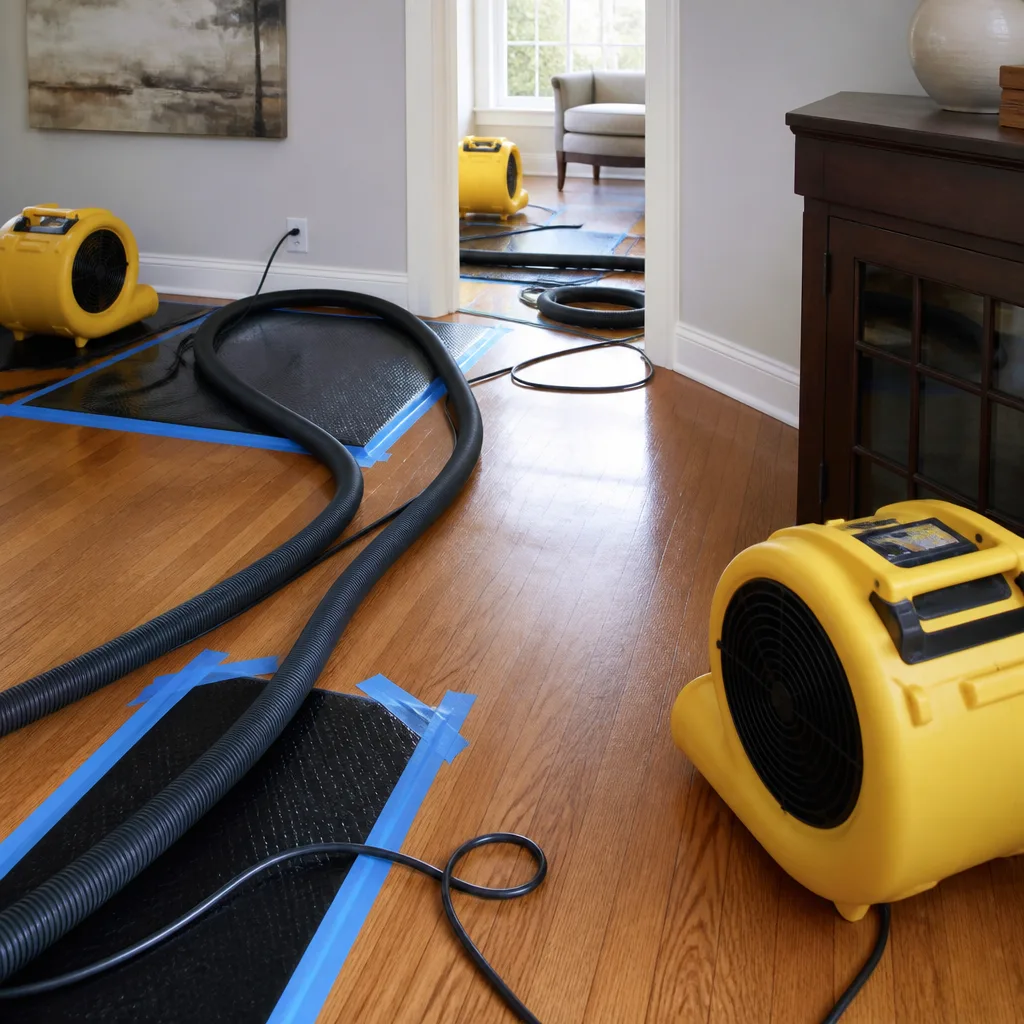
- Running a dehumidifier from a home improvement rental and calling it done. A consumer-grade dehumidifier can remove moisture from the air in a room. It cannot remove moisture trapped inside wall cavities, under flooring, or behind baseboards. That requires directed airflow and, often, injection drying like the Injectidry systems we use in Ventura restoration work, which place negative air pressure directly into the cavity. The room may feel dry while the wall stays wet.
- Delaying a call because you’re worried about the cost of assessment. In Ventura, a professional water damage assessment ranges from $150 to $400, and many restoration companies credit that assessment toward repair work if you proceed. The cost of finding out is a fraction of the cost of waiting, and it’s the only way to know the scope of what you’re dealing with. The habit of avoiding the assessment is how a $400 discovery becomes a $4,000 extraction.
- Trusting that a “handyman special” drywall patch means the water is gone. Patching drywall over a leak that hasn’t been properly dried simply encloses the moisture in the wall. It doesn’t stop the leak, and it doesn’t address the mold that’s already started growing in the cavity. The patch will fail, and the damage behind it will be worse when it does.
When to Call a Professional
Call a professional when you see any of the “Call Today” signs listed above, when your water bill stays elevated after you’ve ruled out toilet flappers and irrigation, when staining grows after rain, or when the musty smell persists after a solid week of open windows and dry weather. You should also call if you’ve found mold and you’re not sure whether it’s surface-only or extends behind a wall or floor, because that distinction determines everything about the cleanup approach and the safety equipment required. If you’re unsure whether you have a problem worth a professional visit, call and describe what you’re seeing. A reputable company will tell you honestly whether it sounds worth their time to come out. Marsh Water Damage Ventura offers free estimates in Ventura, and our team is at Marsh Water Damage Ventura home when you need us. Call (559) 242-4307 and ask for an assessment; the call itself costs nothing, and it’s the difference between knowing and guessing.
Frequently Asked Questions
Most residential water extractions in Ventura run between $900 and $2,500 for the initial response: water extraction, equipment setup, and the first 72 hours of drying. Smaller, contained leaks may come in under $900. Larger losses, or losses where water has saturated multiple rooms or gone through flooring into the subfloor, can range from $3,000 to $8,000 or more depending on how much drywall, flooring, and insulation must be removed and replaced. Every Marsh job gets a written price before the work starts, so the number you’re quoted is the number you’re approving, not an opening bid. Call (559) 242-4307 for an estimate specific to your situation.
Yes. The mold you see is often a fraction of the total colony, and the hidden portion behind drywall or under flooring is actively producing spores into your home’s air every day. Whether or not you react to it personally, the microbial load in the home is elevated, and that affects indoor air quality for everyone in the household, especially children, older adults, and anyone with respiratory conditions. If you suspect or find mold behind a surface, it’s worth a mold remediation assessment in Ventura to determine scope. Testing and assessment are inexpensive relative to the cost of leaving a colony in place.
It depends on the source. Most standard homeowner policies cover sudden and accidental water damage, like a burst supply line or a water heater failure. They typically do not cover gradual leaks that have been ongoing, because the policy treats that as a maintenance issue, and they may not cover flood damage from rising water without a separate flood policy. The best move is to document everything the moment you notice the damage: photos, timestamps, and your water bill history. Restoration companies routinely work directly with adjusters and can provide the documentation, including photo evidence from the initial assessment, thermal imaging, and moisture readings, that supports an insurance claim. We coordinate with insurance on storm damage restoration in Ventura and everyday water losses alike.
For active emergencies, a live person answers the phone 24/7 at (559) 242-4307, and responses are typically same-day in Ventura. For non-emergency inspections, scheduling usually runs one to three business days depending on the week. If you have standing water or a ceiling that’s sagging, say so when you call; those are prioritized. Every Marsh technician arrives with a photo ID badge and a name we’ve already sent you, so the person knocking is the person we said would knock.
Water damage restoration addresses the water: extracting standing water, drying out materials, and repairing what’s been saturated. Mold remediation addresses the biological consequence of water that’s been sitting: containing the affected area, removing the microbial growth, cleaning the air, and restoring the materials or removing them if they can’t be cleaned. Many jobs require both, because where there’s been water for more than 72 hours in Ventura’s climate, mold has typically started. A restoration provider who does both under one roof keeps the process simpler and the pricing more transparent than splitting it across two contractors.
The answer depends entirely on how far the moisture and microbial growth have penetrated. Surface mold on tile or glass can be cleaned with proper protective gear and the right products. Mold that has grown into drywall, behind baseboards, or under flooring cannot be cleaned effectively, because the mold isn’t just on the surface. The material itself is food for the colony, and it has to be removed, not scrubbed. The best way to know is a professional assessment, not guesswork. Call (559) 242-4307 and ask for an assessment; it’s free, and it will tell you which scenario you’re actually in.
The Bottom Line
Ventura’s coastal climate is wonderful to live in and very good at hiding water damage. The warning signs that matter most are the boring ones: a smell that doesn’t go away, a stain that grows after rain, a water bill that doesn’t match your usage, baseboards that are darker at the bottom. None of these are dramatic, but each is a signal that water is somewhere it shouldn’t be, and in this climate, water doesn’t dry out on its own. The cheapest time to address any of these signs is the day you notice them. The most expensive time is after you’ve explained them away for six months, which is when the drywall comes off and the real scope is revealed. If any of this guide struck a nerve, call us. We’re at (559) 242-4307, a live person answers, and the assessment is free.
Written by Tobias Reyner, Owner at Marsh Water Damage Ventura, serving Ventura since 2005.
See the difference
 Before
 After
After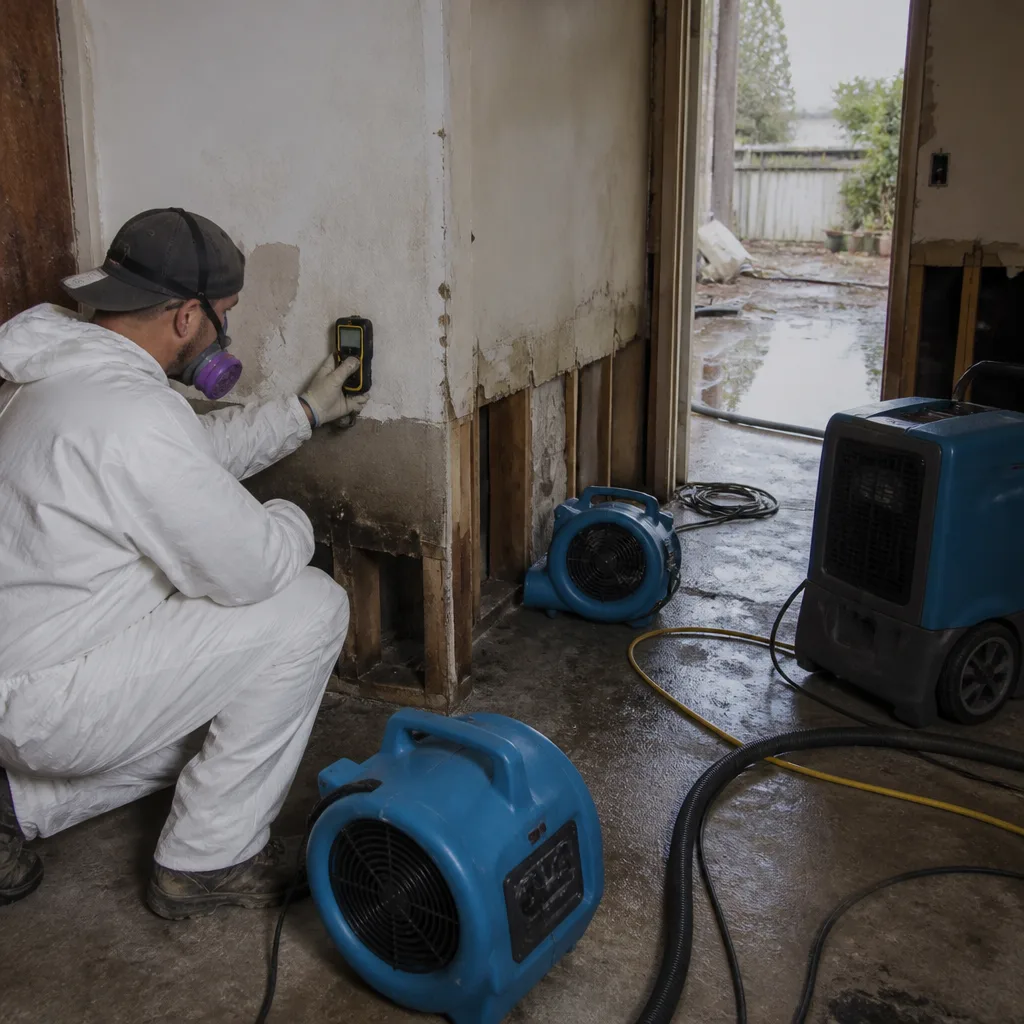 Before
 After
After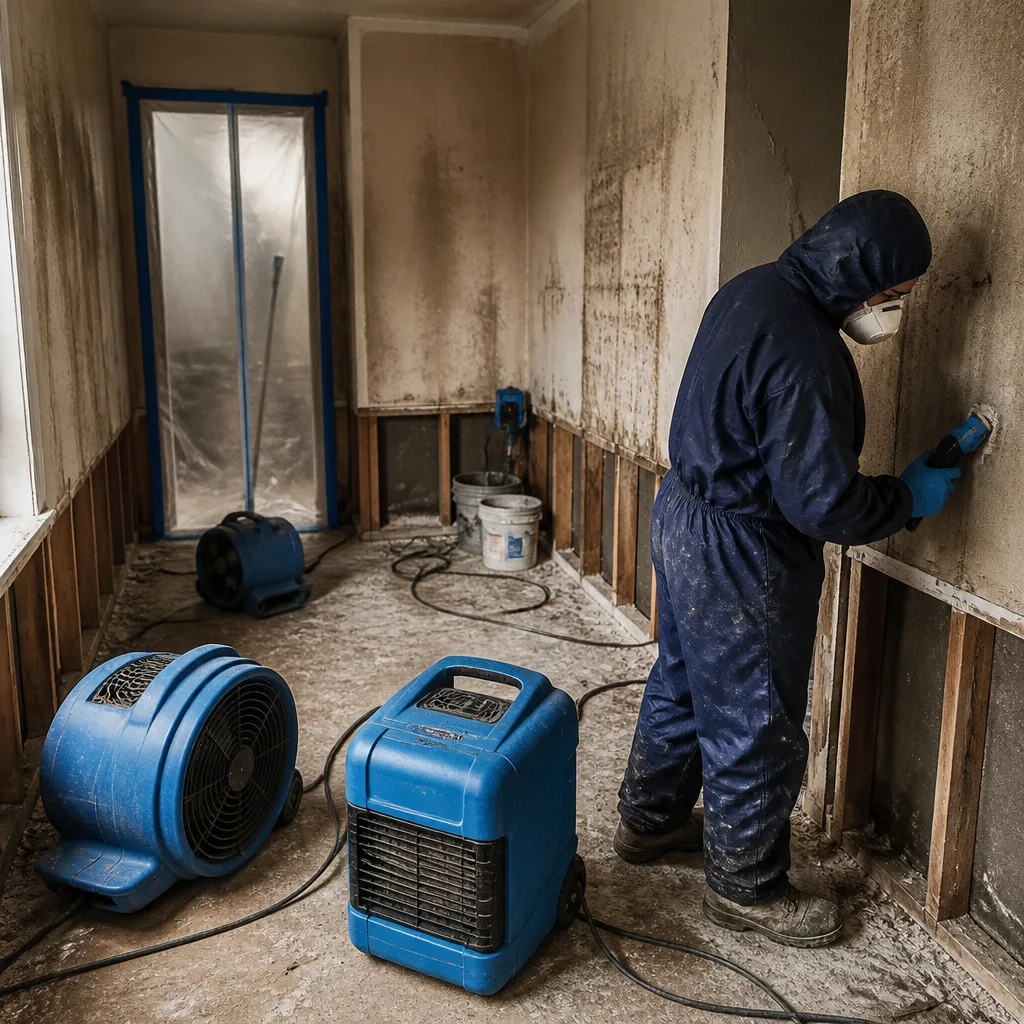 Before
 After
After